Enquiries left waiting for a reply
What happens when a call, message or form sits unread until the customer gives up, and what a small service business can check in one week.

A missed call is rarely just a missed call. In home services, the customer who cannot reach a live person within a minute and a half usually calls the next business on the list, and most never leave a voicemail to come back to. In a practice, a salon, a firm or a studio the same silence reads as being ignored, so the customer moves on before anyone in the business knows there was a decision to lose.
The pattern behind most of these losses is not bad staff. It is that the enquiry never became a record with an owner, a deadline and a place to look. Businesses that handle it well acknowledge automatically, give every enquiry a named person and an ending, let simple work book itself, and review what is still open before they close.
Paid for and lost each week
$455
Over a year
$23,639
5 × $90.92 per enquiry. This counts only what the enquiry cost to win, not the job it would have become.
LocaliQ's June 2026 search advertising benchmark of more than 13,000 US campaigns put the average cost per lead for home and home improvement at $90.92, with 8.05% of clicks becoming an enquiry. LocaliQ, June 2026
Trades, repairs & services at a property
What it looks like
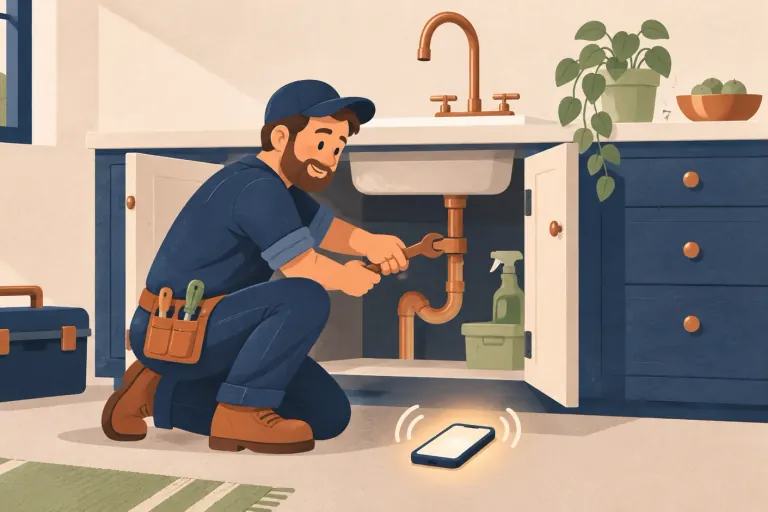
- A homeowner with water coming through the ceiling calls a plumber at 6:40 pm. The owner is under a sink, the office is shut, and the call goes to voicemail that nobody hears until morning.
- A cleaning or landscaping prospect submits a website request during the afternoon rush. The notification sits unread while the crew finishes the day, and the prospect books someone else that evening.
- An HVAC company misses a call during the lunch window, sends no text back, and the caller simply dials the next listing.
What it costs
- Customers already paid for
- The enquiry usually came from a paid click, a lead marketplace or a referral, so the business has already paid for that person. Losing the reply loses the whole spend behind the call, not just the job.
- Trust and reputation
- A customer with an urgent problem remembers silence. Even if they call back later, they arrive expecting to be let down again.
- Load on the owner and team
- Unanswered calls become evening callbacks and paperwork, which pushes the owner further behind and makes the next day slower to answer.
The numbers
- Customers already paid forClockwork’s April 2026 research among 1,247 US home-service contractors found 38% of inbound calls did not reach a live person within 90 seconds.[1]
- Customers already paid forClockwork also reported that 81% of missed callers called the next business in the search results.[1]
- Customers already paid forThe same Clockwork research found 72% of missed callers left no voicemail.[1]
- Load on the owner and teamJobber’s March 2026 survey of 1,050 US home-service business owners found 40% named customer communication among their most time-consuming tasks.[2]
- What customers expectIn the same Jobber survey, 28% of owners said their customers expect an immediate reply and another 28% said customers expect one within an hour.[2]
- What customers expectJobber found 25% of owners named speed of initial response as a factor customers weigh when choosing a provider, against 51% for reviews and ratings.[2]
38%
of inbound calls did not reach a live person within 90 seconds
Clockwork’s April 2026 research among 1,247 US home-service contractors found 38% of inbound calls did not reach a live person within 90 seconds.[1]
How well-run businesses handle it
- One queue for calls and forms. Send missed calls, voicemails, website forms and messages into a single list that one person opens, instead of leaving each channel to whoever notices it.
- Automatic acknowledgement, same minute. When nobody can answer, text back with the business name, a realistic callback window and a booking link, so the caller knows the call landed.
- A named owner and a deadline. Every new enquiry gets a person and a time it must be answered by, such as 15 minutes during work hours and by 8 am the next day after hours.
- Let simple jobs book themselves. Point routine work at online booking so a quote request does not have to wait for the office to open.
- Work the open list three times a day. Open at start, midday and before close and clear or reassign everything still waiting. Nothing should cross a day boundary without a reason written down.
Where it lives in the software
- Housecall Pro: Settings > Inbox > Voice > Missed Call Automation. Sends a text to an existing customer after a missed call. You choose during business hours, outside business hours or any time of day, edit the message, add variables and include the online booking link.[3]
- Jobber: Settings > Emails & Text Messages > Email reply settings. Chooses the team member who receives new request alerts and client replies for requests, quotes, jobs and invoices. Booking confirmations and automatic assessment and visit reminders use templates on the same page.[4]
Mistakes that make it worse
- A missed-call text that says someone will be in touch but creates no task is just a tidier version of silence.
- Leaving voicemail as the only fallback wastes most of the missed demand, since most callers never leave a message.
- Turning on reminders without connecting them to cancellations means a customer who called it off still receives a reminder for a visit that is not happening.
Count it in one week
- Missed inbound calls that got no human callback within 15 minutes during work hours.
- New website or message enquiries still unanswered at closing time.
- Enquiries from a paid source that ended with no booking, no quote and no clear no.
Clinics & health practices

What it looks like
- A prospective dental patient leaves a message about tooth pain at lunchtime. Nobody calls back before the practice closes and the patient rings another office.
- A therapy client messages the portal to move tomorrow’s appointment. The front desk sees it after the original slot has already passed.
- A chiropractic patient gets a reminder they cannot reply to, so the only way to change the visit is to phone during the exact hours they are at work.
What it costs
- Customers already paid for
- A new patient enquiry is the start of a relationship that may last years. When the first contact goes unanswered, the practice loses the whole course of care, not one visit.
- Trust and reputation
- Patients read silence from a practice as not being noticed, and that feeling survives even a good clinical visit later.
- Load on the owner and team
- Unanswered portal messages and reschedule requests turn into no-shows and angry phone calls, which land on the front desk at the worst moment.
The numbers
- Customers already paid forSinch’s January 2026 survey of 1,000 US patients aged 18 to 78 found 34% had missed a medical appointment because a reminder did not arrive or was not seen in time.[5]
- Trust and reputationIn the same Sinch survey, nearly 40% said they had missed an important healthcare message because of poor communication from a provider.[5]
- What customers expectSinch found 78% of its 1,000 US patient respondents expected a same-day response when they contacted a healthcare provider.[5]
- Trust and reputationThe same Sinch survey found 55% of patients were comfortable with automation for simple reminders and routine updates, while 22% were uncomfortable with AI chatbots and wanted a real person.[5]
- What customers expectSinch found 68% of patients wanted two-way texting so they could ask simple questions and confirm or reschedule appointments.[5]
- What customers expectTebra found 69% of patients said they would be more likely to attend if they could reschedule online.[6]
78%
expect a same-day response from a healthcare provider
Sinch found 78% of its 1,000 US patient respondents expected a same-day response when they contacted a healthcare provider.[5]
How well-run businesses handle it
- Separate receipt from clinical answer. Acknowledge every message with a realistic response window, and keep clinical questions with the clinician. An automated reply should never look like advice.
- Make new requests visible to two people. New appointment requests, reschedule messages and cancellations should appear in a queue at least two staff members can see, not only in one person’s inbox.
- Offer self-rescheduling. Give patients a link that lets them move or cancel a visit without phoning during office hours.
- Clear the queue before closing. Review every unresolved request at the end of the day and write down what happens to each one.
- Follow up after a missed visit. Send a short message the same or next day offering a new time, and note whether the patient had already tried to reach the practice.
Where it lives in the software
- Zocdoc: Inbox > New bookings. Unconfirmed bookings carry a New booking tag. Open the booking and select Confirm patient can be seen. Zocdoc expects every appointment to be honored whether or not it is confirmed, so confirming is about catching problems early.[7]
- SimplePractice: Profile > Settings > Notification preferences. Turns push notifications on for new secure messages and new appointment requests, so a request does not sit unseen until someone opens the desktop app.[8]
Mistakes that make it worse
- Letting a chatbot appear to give clinical guidance, when patients say diagnoses and test results should involve a person.
- Missing a reschedule request and then sending a no-show fee, which patients name as a reason to change practice.
- Using one shared login for messages so nobody can tell who has already replied.
Count it in one week
- Patient enquiries that waited past the response window the practice promises.
- No-shows where the patient had already called, messaged or tried to reschedule.
- New-patient enquiries that ended with neither a booked visit nor a written decision not to book.
Salons, spas & personal care

What it looks like
- The salon phone rings while every stylist is with a client. Nobody picks up, the caller does not leave a message, and the chair stays empty later that week.
- A lash client messages to move an appointment, and the request is split between Instagram, text and the booking app so three people each think someone else has it.
- A spa cancellation opens a valuable slot. The waitlist is checked after the slot has passed and the hour is lost.
What it costs
- Customers already paid for
- The demand already existed and was often paid for through ads or marketplace listings. Losing it at the handoff wastes the spend and leaves a gap in the book that is hard to fill at short notice.
- Trust and reputation
- A guest who has to chase for an answer decides the business is disorganized, even when the treatment itself is good.
- Load on the owner and team
- Missed calls and half-answered messages land on the front desk between check-ins, so the busiest person also owns the follow-up nobody assigned.
The numbers
- Customers already paid forZenoti’s October 2026 analysis of 2.97 million calls across 521 beauty and wellness businesses, collected from February to August 2026, found 57.4% of missed callers were never followed up.[9]
How well-run businesses handle it
- One visible list for missed demand. Put missed calls, voicemails, booking changes and waitlist requests in one queue the front desk works, instead of leaving each channel to whoever notices.
- Assign every voicemail. Each unread voicemail gets a name, and it is closed only after contact or a deliberate decision to close it.
- Work the cancellation queue at once. When a slot opens, offer it to the waitlist in a set order within the hour, not at the end of the day.
- Answer in minutes, not next business day. Set a two-hour rule for replies and abandoned bookings, and check the actual response time for a week before trusting it.
- Check the queue before the desk closes. Leave nothing unassigned overnight, because the evening is when many guests finally have time to book.
Where it lives in the software
- Zenoti: Phone Tree builder > Missed call branch > Voicemail node > Specific agents. Routes missed calls to a recorded prompt and assigns each voicemail to named agents. The Voice Mails inbox shows transcripts, status, sentiment and assignee, and assigned agents get an unread badge and a notification banner.[10]
Mistakes that make it worse
- Automating reminders without stopping them when the appointment changes, so a guest who canceled still gets a cheerful reminder.
- Leaving missed call and followed up as nobody’s named job, which is how most missed callers end up with no follow-up at all.
- Blasting the whole waitlist again after someone has already accepted the slot.
Count it in one week
- Missed calls still unassigned 15 minutes into opening hours.
- Canceled slots that stayed empty while someone was waiting for that service or stylist.
- Messages answered only after the guest sent a second message or called again.
Professional & client services

What it looks like
- A prospective client completes a law firm intake form after finding the firm through search. The alert goes to one lawyer who is in court all morning.
- A bookkeeping prospect calls during tax season, reaches voicemail, and hears back two days later when they have already hired someone.
- A referred financial-advice prospect emails on Friday afternoon. No one replies before the weekend, and by Monday three other firms have spoken to them.
What it costs
- Customers already paid for
- Professional work is won before any work starts, on the strength of a first conversation. A slow reply hands a paid or referred prospect to a firm that answered.
- Trust and reputation
- Clients judge how the firm will treat their matter by how it treats the first enquiry. Silence suggests the matter will also wait.
- Load on the owner and team
- Unanswered enquiries pile into evenings, and the person who should be doing billable work spends the night returning calls from people who have moved on.
The numbers
- Customers already paid forQuo’s August 2026 analysis of 3.96 million missed calls at professional-services businesses found 33% were returned within 48 hours.[11]
- Customers already paid forAcross 16.7 million missed calls at Quo customer businesses over three months, 69% received no callback within 48 hours, Quo reported in August 2026.[11]
- What customers expectMartindale-Avvo’s September 2026 research among more than 1,200 legal consumers found 55% began looking for a solution within 72 hours.[12]
- What customers expectThe same Martindale-Avvo research found 28% of legal consumers contacted six or more attorneys.[12]
33%
of missed calls at professional-services businesses were returned within 48 hours
Quo’s August 2026 analysis of 3.96 million missed calls at professional-services businesses found 33% were returned within 48 hours.[11]
How well-run businesses handle it
- Every lead lands in one inbox. Website forms, marketing integrations, Local Services Ads and booked appointments should create leads in the same list, with the source attached.
- A named person gets the alert. Turn on email alerts for new leads and assign a person, not a shared mailbox, so someone knows the enquiry is theirs.
- Answer or offer a time the same day. Reply with a real answer or a scheduling link before the day ends, even if the full consultation happens later.
- Let prospects book themselves. A self-scheduling link removes the wait for office hours and puts the appointment into the same workflow as a lead.
- Close every lead deliberately. Each lead ends as a consultation, a written decline or a documented withdrawal. Contacted is not a status until a person has spoken to the prospect.
Where it lives in the software
- Clio Grow: Settings > Personal > Notification settings > Email me when a new lead is added to the inbox. Sends an email when a lead arrives from the website, a marketing integration, Google Local Services Ads or a Clio Scheduler booking, so the lead does not sit in the Leads tab unseen.[13]
Mistakes that make it worse
- Marking a lead contacted because an automated email went out, when no person has read the matter.
- Sending texts that look conversational but cannot be replied to because messaging was never enabled for that account.
- Treating a friendly first call as a booking, so nobody follows up when the prospect says they will think about it.
Count it in one week
- New enquiries with no named owner 10 minutes into office hours.
- Enquiries that reached 24 hours without a human reply.
- Referred or paid prospects who never reached a consultation, a clear decline or a documented withdrawal.
Agencies & project teams

What it looks like
- A paid-search prospect asks for a proposal through the website form. The alert goes only to the founder, who is presenting to a client all afternoon.
- A referral from an existing client arrives as an email or a direct message and is buried under delivery work for three days.
- A web-design lead asks one scoping question. The team plans to answer after a deadline and remembers a week later, when the lead has signed elsewhere.
What it costs
- Customers already paid for
- Agency growth leans on referrals and word of mouth, so a slow reply wastes a recommendation somebody put their name behind, as well as any ad spend behind the enquiry.
- Trust and reputation
- The prospect is judging how the agency will treat them as a client. A late first reply is a preview of the relationship.
- Load on the owner and team
- New business replies get pushed into evenings because client work fills the day, which makes the founder the permanent bottleneck.
The numbers
- What customers expectAgencyAnalytics found 44% of agency respondents said clients now expect faster turnaround than a year earlier.[14]
- What customers expectIn the same June 2026 survey of 494 agency professionals, 36% said speed and clarity of the proposal mattered in winning pitches.[14]
How well-run businesses handle it
- Stop routing new leads to one inbox. Send form submissions to the contact owner or to a named set of users, not only to the founder’s email address.
- Run one shared inbox for all channels. Route form, chat and connected email into a single inbox the people who can answer actually open.
- Acknowledge automatically, qualify by hand. The acknowledgement can be instant and factual. Scope, price and promises need a person.
- Make untouched leads visible as exceptions. Anyone still unreplied at the end of the working day should appear as an exception, not as a read message in someone’s folder.
- Protect referral replies. Tag referrals separately so a recommendation from a client is answered first, even during a busy delivery week.
Where it lives in the software
- HubSpot: Marketing > Forms > form > settings icon > Submission settings > Real-time submission notifications. Notifies the contact owner or named users and teams when a form is submitted. If a contact has no owner, no notification is sent, so ownership must be set first.[15]
- HubSpot: Settings > Inbox & Help Desk > Inboxes > Automation. Connects email and chat channels into one inbox, limits access to specific users and teams, and assigns incoming conversations to users or teams so each lead has an owner.[16]
Mistakes that make it worse
- Letting an AI agent invent scope, timing or pricing to produce a fast reply.
- Reading a form notification without changing the lead status, so two people think the other replied.
- Leaving every new lead with the founder while delivery work fills the day.
Count it in one week
- Form or message enquiries unassigned 15 minutes into the working day.
- Qualified prospects whose first human reply took more than one working day.
- Referral and paid-ad prospects who disappeared before a discovery call.
Classes, studios & memberships

What it looks like
- A prospective member asks at 9:30 pm whether tomorrow’s beginner class suits them. Nobody answers until after the class has run.
- A parent sends a music or martial arts school a form about a trial lesson, hears nothing that evening, and calls a competitor.
- A member quietly stops attending for a month. Nobody notices until the cancellation arrives.
What it costs
- Customers already paid for
- Trial enquiries and class questions are the start of a membership. A delayed answer loses the join, and often the trial booking that would have made the decision easy.
- Trust and reputation
- Members who go unnoticed feel invisible, and a business that does not notice absence looks like it only wanted the payment.
- Load on the owner and team
- Front desk staff carry a day of unanswered questions into the evening class changeover, when they are least able to answer.
The numbers
- What customers expectZenoti’s 2026 Fitness Consumer Survey of US gym and health-club members, run in May 2026 and reported in October 2026, found 41% wanted questions answered and bookings handled at any time of day.[17]
- Customers already paid forThe same Zenoti survey found 63% had already decided to join before booking their first tour or trial.[17]
- Trust and reputationZenoti found 49% of lapsed members said their gym had never proactively reached out.[17]
- Trust and reputationZenoti found 46% of members said they would feel more loyal if their gym noticed a two-week absence and contacted them.[17]
- What customers expectZenoti found 58% wanted an alert before their membership auto-renewed and 20% wanted a notification when a place opened in a class they usually attend.[17]
63%
had already decided to join before booking a tour or trial
The same Zenoti survey found 63% had already decided to join before booking their first tour or trial.[17]
How well-run businesses handle it
- Capture every trial and class question. Website forms, messages and after-hours calls should all create one enquiry record, however late they arrive.
- Acknowledge and offer self-booking. Send an instant reply with the timetable and a booking link, and route questions that need judgement to a person.
- Give the waitlist a controlled order. When a place opens, notify the waitlist in priority order with a response window, and stop notifying once someone accepts.
- Review open enquiries before closing. Anything still unanswered at the end of the day gets an owner and a time, or a written reason it can wait.
- Check absences in the same review. Add a list of members who have not attended for two weeks to the daily or weekly check, so silence is noticed before the cancellation.
Where it lives in the software
- Zenoti: Configuration > Fitness > General Setup > Miscellaneous. Turns on waitlist confirmation for class registration, sends notifications in waitlist priority order, sets the response window in hours, drops unresponsive students and pauses the timer outside business hours. A center can override the organization setting.[18]
Mistakes that make it worse
- Treating an active membership as a healthy one, when many members stop attending before they cancel.
- Notifying the whole waitlist again after a place has been accepted.
- Leaving trial enquiries until the next class has already run, which answers a question nobody is asking any more.
Count it in one week
- Trial enquiries unanswered before the next relevant class or session.
- Open class places that stayed empty while someone was on the waitlist.
- Members absent for two weeks who received no human or approved automated check-in.
Sources
Every figure above was read on the source page.
- Home Service Businesses Miss 38 Percent of Their Phone Calls, Clockwork, April 2026.1,247 US home-service contractors; more than 2.4 million inbound calls; direct test calls to 340 randomly selected businesses across six US metropolitan areas; collected January 15 to March 30, 2026
- 2026 Home Service Trends Report, Jobber, March 2026.1,050 US home-service business owners across cleaning, HVAC, roofing, plumbing, electrical, lawn care, tree care and general contracting; Conjointly fieldwork in December 2025; margin of error ±3 percentage points at 90% confidence
- Voice Settings Overview, Housecall Pro, July 2026.
- Emails and Text Messages Settings, Jobber, October 2026.
- The State of Patient Communication in 2026, Sinch, January 2026.1,000 US patients aged 18 to 78, surveyed December 4 to 7, 2025
- How no-shows impact patient retention and what to do about it, Tebra, June 2026.3,196 US adults aged 18 and over, most recently fielded February 12, 2026, weighted to the US population, credibility interval ±3 percentage points; provider survey of 473 providers, with a 2026 base of 129, fielded February 9, 2026
- How do I confirm a booking?, Zocdoc, January 2026.
- Managing push notifications and other settings on iPhone/iPad, SimplePractice, June 2026.
- The follow-up nobody owns, Zenoti, October 2026.2.97 million calls across 521 beauty and wellness businesses, collected February to August 2026; geography of this sample not disclosed
- Release Notes, June 16, 2026, Zenoti, June 2026.
- Small business callback statistics in 2026: data from 16M+ calls, Quo, August 2026.16.7 million missed calls at Quo customer businesses over three months, including 3.96 million in the professional-services subset; a callback counted as an outbound call to the caller within 48 hours; geography not stated
- The New Legal Consumer Journey, Martindale-Avvo, September 2026.More than 1,200 legal consumers plus more than three dozen in-depth interviews; geography and field dates not disclosed
- Manage Leads in Clio Grow, Clio, July 2026.
- 2026 Marketing Agency Benchmarks Report, AgencyAnalytics, June 2026.494 agency professionals; Typeform fieldwork February to April 2026; 45% owners or leaders and 55% employees; 64% US, 13% Australia, 8% UK and 7% Canada
- Set up form submission notifications, HubSpot, June 2026.
- Set up the conversations inbox, HubSpot, August 2026.
- AI for gyms and fitness centers: the complete operator’s guide, Zenoti, October 2026.1,393 current and former US gym and health-club members, surveyed in May 2026 through SurveyMonkey Audience, with a stated margin of ±2.695 percentage points
- Release Notes, March 17, 2026, Zenoti, March 2026.
Related: What a new customer costs to win · Owner and operator stress from admin work